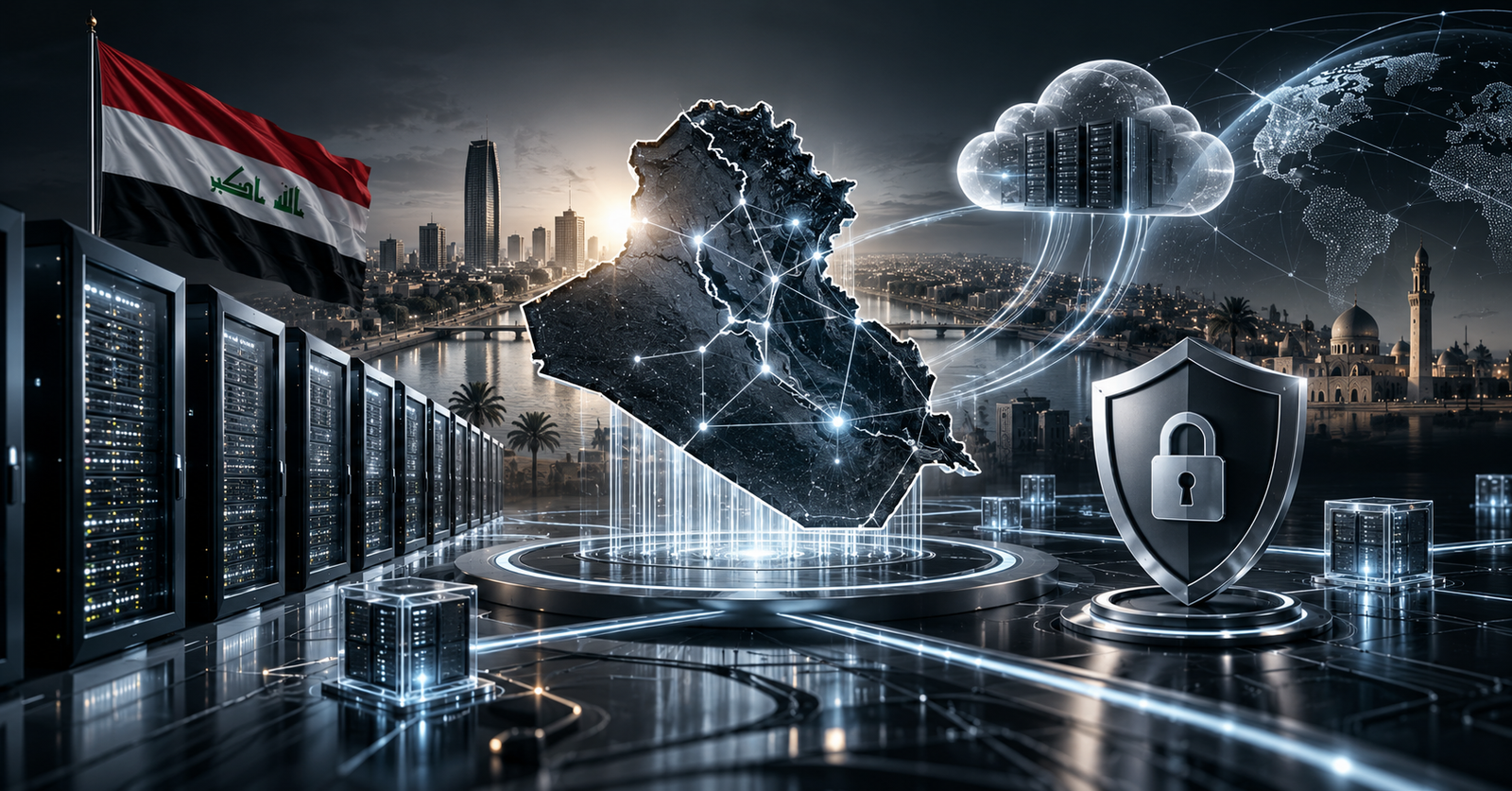
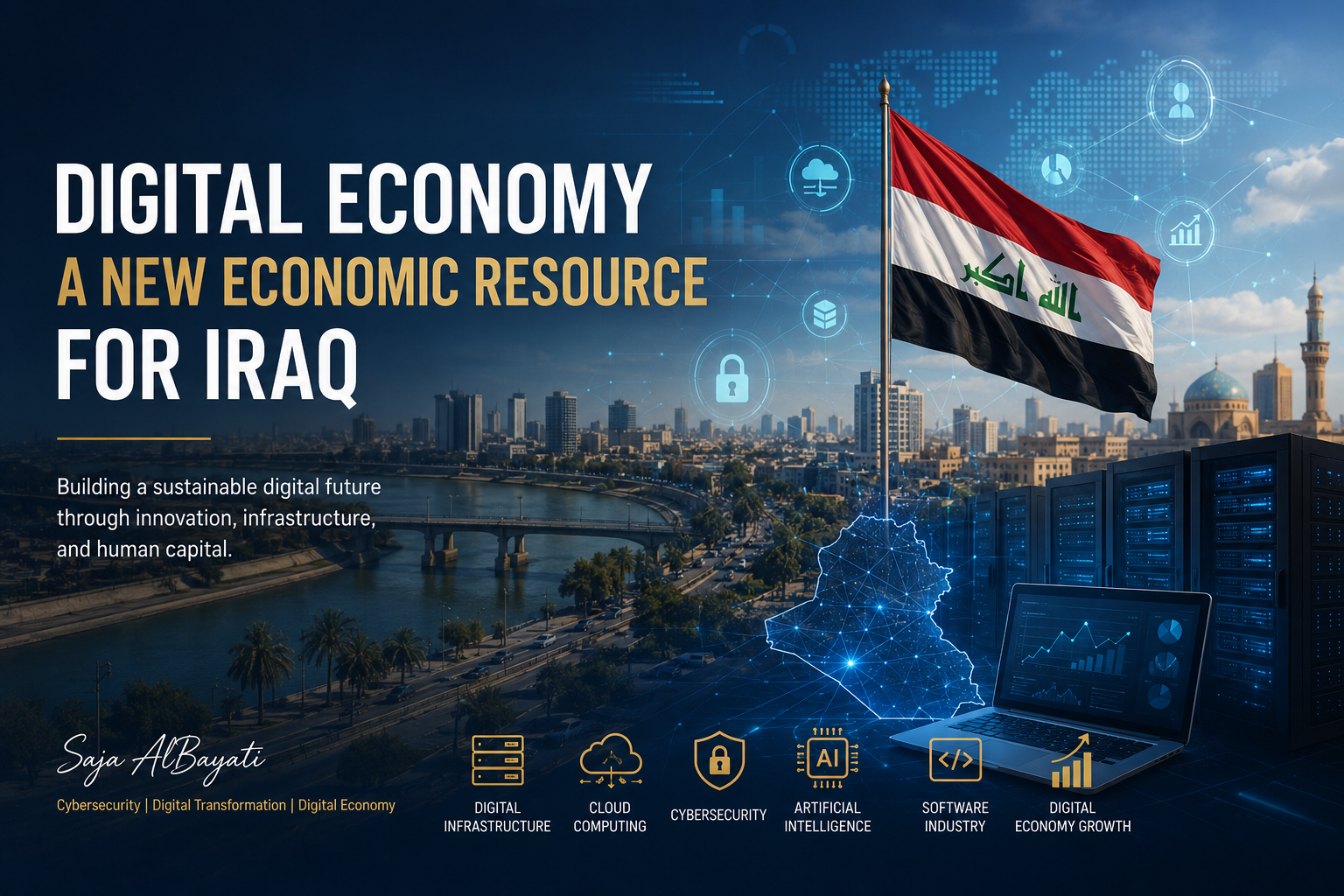
Digital transformation is no longer simply a means of simplifying government procedures or converting paper-based transactions into electronic services. Today, it has become one of the major drivers of the global economy, capable of generating employment opportunities, attracting investment, and creating new sources of revenue.
In Iraq, digital transformation is still often associated with the digitization of government services, electronic payments, and automation. While these are important steps, they represent only part of a much broader opportunity.
The question Iraq should be asking today is:
How can we move from using technology to producing it, and from spending on digital solutions to generating economic value and revenue from them?
From Digital Transformation to a Digital Economy
There is an important distinction between digitizing services and building a productive digital economy.
When a government transaction moves from paper to an electronic platform, this is digitization. However, when Iraqi technology companies develop software, digital platforms, cybersecurity services, cloud solutions, artificial intelligence applications, and other products that can be sold locally and internationally, this represents a productive digital economy.
This is the transition Iraq should increasingly focus on.
Iraq has a large domestic market, a young population, widespread use of smartphones and internet services, and growing demand from both government institutions and the private sector for digital systems and solutions.
This demand can be transformed from an expenditure into an opportunity to establish a competitive Iraqi digital industry.
Data as an Economic Resource
One of Iraq's potentially valuable resources that has yet to be fully utilized is data.
Government, financial, healthcare, educational, and private-sector institutions generate enormous amounts of data every day. However, the economic value of data does not come merely from storing it. Its real value comes from organizing, analyzing, protecting, and using it responsibly to improve decision-making, develop services, and create innovative solutions.
This requires clear policies for data governance, privacy, cybersecurity, and responsible use, alongside greater adoption of data analytics and artificial intelligence.
Properly managed data can help improve economic planning, identify inefficiencies, enhance public services, and support better investment decisions.
Data Centers and Cloud Computing
A significant part of the global digital economy depends on infrastructure that ordinary users rarely see.
Data centers, cloud computing, telecommunications networks, storage systems, and computing infrastructure have become essential economic assets.
Iraq therefore needs to encourage investment in local data centers, cloud infrastructure, and digital services, while ensuring high standards of cybersecurity, business continuity, and information protection.
Developing this infrastructure locally would not only create economic opportunities but could also strengthen digital sovereignty and reduce excessive dependence on foreign infrastructure for sensitive digital services and data.
Building a National Software Industry
Iraqi institutions spend significant amounts on software, digital platforms, systems, and technology services.
Part of this demand can become a market for Iraqi developers and technology companies.
Iraq has the potential to develop domestic capabilities in enterprise systems, mobile applications, e-commerce, financial technology, cybersecurity, artificial intelligence, data analytics, and digital government solutions.
When an Iraqi company develops a digital product that succeeds locally and can later be marketed internationally, it becomes a form of digital export.
Unlike traditional exports, software and digital services can cross borders without requiring conventional transportation infrastructure.
This represents an important economic opportunity for Iraq.
Cybersecurity as an Economic Investment
A strong digital economy cannot exist without a secure digital environment.
As electronic services, digital payments, government databases, and online platforms expand, the value of the digital assets requiring protection also increases.
Cybersecurity should therefore not be viewed merely as an additional institutional expense. It should be considered an essential component of national digital economic infrastructure.
Developing Iraq's cybersecurity sector can also create companies, jobs, and specialized services in areas such as security testing, risk management, Security Operations Centers, incident response, cybersecurity consulting, compliance, and professional training.
Artificial Intelligence as an Economic Opportunity
Artificial intelligence should not remain limited to tools developed abroad that Iraq simply consumes.
There is an opportunity to develop local AI applications and solutions designed around the specific needs of Iraqi institutions and society—from government services and education to healthcare, finance, agriculture, and industry.
Achieving this requires reliable data, computing infrastructure, skilled professionals, supportive legislation, and an environment that enables startups and technology companies to innovate and grow.
Human Capital Is the Most Important Infrastructure
Digital infrastructure is not limited to servers, networks, and data centers.
People are its most important component.
Iraq has a large young population that can become a significant economic force in software development, cybersecurity, artificial intelligence, data analytics, cloud computing, and other technology sectors.
This requires connecting education and professional training with actual market needs, supporting practical digital skills, encouraging entrepreneurship and freelancing, and enabling Iraqi professionals to access regional and international markets.
An Iraqi software developer, cybersecurity professional, designer, or data analyst providing services to a company outside Iraq is effectively exporting a digital service and bringing revenue into the Iraqi economy.
This economic model deserves greater attention.
What Does Iraq Need?
Building a productive digital economy requires an integrated ecosystem that includes robust digital infrastructure, modern data-protection legislation, secure digital identity and electronic signatures, reliable electronic payment systems, cybersecurity capabilities, and investment in data centers and cloud computing.
It also requires support for Iraqi technology companies and startups, development of digital skills, encouragement of software and AI industries, and policies that enable Iraqi companies and professionals to export digital services.
Most importantly, Iraq needs a clear economic vision for digital transformation.
The objective should not only be to make government institutions faster and more efficient, but also to transform technology itself into an economic sector that contributes to GDP, creates employment, attracts investment, and generates new sources of national revenue.
From Technology Consumer to Technology Producer
Iraq has a genuine opportunity to build a strong digital economy, but achieving this requires changing the way technology is perceived.
Instead of asking only:
“What technology or system do we need to purchase?”
We should also ask:
“Can we develop it in Iraq, and can this solution eventually become an Iraqi digital product that reaches other markets?”
The digital economy can become one of Iraq's new economic resources alongside its traditional resources if the country invests effectively in people, data, infrastructure, cybersecurity, and innovation.
The ultimate goal should not simply be for Iraq to use more technology, but to gradually move from being a consumer of technology to becoming a producer and exporter of digital services and solutions.
Eng. Eng. Saja Albayati
Cybersecurity | Digital Transformation | Digital Economy
<!-- SAJA_BACKLINK_DATA_PROTECTION_FINAL --><p>The digital economy also depends on digital privacy and data protection in Iraq.</p>
In Iraq, digital transformation is still often associated with the digitization of government services, electronic payments, and automation. While these are important steps, they represent only part of a much broader opportunity.
The question Iraq should be asking today is:
How can we move from using technology to producing it, and from spending on digital solutions to generating economic value and revenue from them?
From Digital Transformation to a Digital Economy
There is an important distinction between digitizing services and building a productive digital economy.
When a government transaction moves from paper to an electronic platform, this is digitization. However, when Iraqi technology companies develop software, digital platforms, cybersecurity services, cloud solutions, artificial intelligence applications, and other products that can be sold locally and internationally, this represents a productive digital economy.
This is the transition Iraq should increasingly focus on.
Iraq has a large domestic market, a young population, widespread use of smartphones and internet services, and growing demand from both government institutions and the private sector for digital systems and solutions.
This demand can be transformed from an expenditure into an opportunity to establish a competitive Iraqi digital industry.
Data as an Economic Resource
One of Iraq's potentially valuable resources that has yet to be fully utilized is data.
Government, financial, healthcare, educational, and private-sector institutions generate enormous amounts of data every day. However, the economic value of data does not come merely from storing it. Its real value comes from organizing, analyzing, protecting, and using it responsibly to improve decision-making, develop services, and create innovative solutions.
This requires clear policies for data governance, privacy, cybersecurity, and responsible use, alongside greater adoption of data analytics and artificial intelligence.
Properly managed data can help improve economic planning, identify inefficiencies, enhance public services, and support better investment decisions.
Data Centers and Cloud Computing
A significant part of the global digital economy depends on infrastructure that ordinary users rarely see.
Data centers, cloud computing, telecommunications networks, storage systems, and computing infrastructure have become essential economic assets.
Iraq therefore needs to encourage investment in local data centers, cloud infrastructure, and digital services, while ensuring high standards of cybersecurity, business continuity, and information protection.
Developing this infrastructure locally would not only create economic opportunities but could also strengthen digital sovereignty and reduce excessive dependence on foreign infrastructure for sensitive digital services and data.
Building a National Software Industry
Iraqi institutions spend significant amounts on software, digital platforms, systems, and technology services.
Part of this demand can become a market for Iraqi developers and technology companies.
Iraq has the potential to develop domestic capabilities in enterprise systems, mobile applications, e-commerce, financial technology, cybersecurity, artificial intelligence, data analytics, and digital government solutions.
When an Iraqi company develops a digital product that succeeds locally and can later be marketed internationally, it becomes a form of digital export.
Unlike traditional exports, software and digital services can cross borders without requiring conventional transportation infrastructure.
This represents an important economic opportunity for Iraq.
Cybersecurity as an Economic Investment
A strong digital economy cannot exist without a secure digital environment.
As electronic services, digital payments, government databases, and online platforms expand, the value of the digital assets requiring protection also increases.
Cybersecurity should therefore not be viewed merely as an additional institutional expense. It should be considered an essential component of national digital economic infrastructure.
Developing Iraq's cybersecurity sector can also create companies, jobs, and specialized services in areas such as security testing, risk management, Security Operations Centers, incident response, cybersecurity consulting, compliance, and professional training.
Artificial Intelligence as an Economic Opportunity
Artificial intelligence should not remain limited to tools developed abroad that Iraq simply consumes.
There is an opportunity to develop local AI applications and solutions designed around the specific needs of Iraqi institutions and society—from government services and education to healthcare, finance, agriculture, and industry.
Achieving this requires reliable data, computing infrastructure, skilled professionals, supportive legislation, and an environment that enables startups and technology companies to innovate and grow.
Human Capital Is the Most Important Infrastructure
Digital infrastructure is not limited to servers, networks, and data centers.
People are its most important component.
Iraq has a large young population that can become a significant economic force in software development, cybersecurity, artificial intelligence, data analytics, cloud computing, and other technology sectors.
This requires connecting education and professional training with actual market needs, supporting practical digital skills, encouraging entrepreneurship and freelancing, and enabling Iraqi professionals to access regional and international markets.
An Iraqi software developer, cybersecurity professional, designer, or data analyst providing services to a company outside Iraq is effectively exporting a digital service and bringing revenue into the Iraqi economy.
This economic model deserves greater attention.
What Does Iraq Need?
Building a productive digital economy requires an integrated ecosystem that includes robust digital infrastructure, modern data-protection legislation, secure digital identity and electronic signatures, reliable electronic payment systems, cybersecurity capabilities, and investment in data centers and cloud computing.
It also requires support for Iraqi technology companies and startups, development of digital skills, encouragement of software and AI industries, and policies that enable Iraqi companies and professionals to export digital services.
Most importantly, Iraq needs a clear economic vision for digital transformation.
The objective should not only be to make government institutions faster and more efficient, but also to transform technology itself into an economic sector that contributes to GDP, creates employment, attracts investment, and generates new sources of national revenue.
From Technology Consumer to Technology Producer
Iraq has a genuine opportunity to build a strong digital economy, but achieving this requires changing the way technology is perceived.
Instead of asking only:
“What technology or system do we need to purchase?”
We should also ask:
“Can we develop it in Iraq, and can this solution eventually become an Iraqi digital product that reaches other markets?”
The digital economy can become one of Iraq's new economic resources alongside its traditional resources if the country invests effectively in people, data, infrastructure, cybersecurity, and innovation.
The ultimate goal should not simply be for Iraq to use more technology, but to gradually move from being a consumer of technology to becoming a producer and exporter of digital services and solutions.
Eng. Eng. Saja Albayati
Cybersecurity | Digital Transformation | Digital Economy
<!-- SAJA_BACKLINK_DATA_PROTECTION_FINAL --><p>The digital economy also depends on digital privacy and data protection in Iraq.</p>